Seth Fischer
The Vampire Prince’s BrideSeth Fischer is a shifter senator whose significance lies in the collision between public visibility and institutional prejudice. His political identity is inseparable from the danger of being known: he has survived attempts on his life, opposed a proposed registry that could lead to detention, and used his own celebrity and elected office to argue that shifters should not have to hide or suppress themselves.
Identity and Public Background
Seth is Senator Ana Medina’s employer and the politician for whom she records and refines a speech intended for parliament. The speech must persuade other senators that the proposed Shifter Registry is unconstitutional and threatens shifter lives. Its delivery requires unusual discipline: Seth must sound passionate without becoming emotional, criticize the policy without appearing to attack its supporters, and make the argument seem directed at the real issue rather than a convenient straw man. Ana’s work on the speech shows that his public advocacy depends not only on conviction but also on careful political performance.
Seth’s position carries exceptional symbolic weight. He is only the third shifter ever elected to a senatorial office, and he has already served longer than either of his two predecessors. His election represents changing public attitudes, particularly as other countries, including China, condemn the treatment of shifters in America. The political achievement is therefore both personal and collective: his continued presence in office demonstrates that a shifter can enter a national institution that has historically helped regulate and exclude people like him.
Before revealing that he was a shifter, Seth was an extraordinarily popular movie star. His image had been built around an attractive, recognizably all-American persona, and an anti-shifter group had even used him as its poster boy before his identity became public. That reversal gives his career a pointed irony. The same public image that once made him useful to anti-shifter propaganda becomes part of the authority with which he challenges anti-shifter prejudice. His celebrity also makes his political visibility unusually dangerous; the narrative notes that the attempt on his life is not the first since he entered politics and began fighting for shifter rights.
Political Advocacy and the Registry Conflict
Seth opposes the Shifter Registry Act because he sees it as more than an administrative measure. Ana understands the registry as one step away from a Shifter Detainment Act, and Seth’s speech is designed to expose that danger before the proposed law can be presented as a neutral safeguard. His objection joins constitutional principle to practical concern: registration would mark shifters as a population that can be identified, monitored, and potentially confined.
The historical context surrounding his position is severe. Shifters were once treated during the European colonialization period as devil-worshipping witches and were slaughtered through burning, hanging, and organized hunts. Seth’s political campaign addresses the persistence of that older logic in modern legal form. The threat is no longer only a mob or a public execution; it can also appear as legislation that classifies a minority while claiming to protect society.
His advocacy is also grounded in mental health rather than in civil rights as an abstract slogan. In a broadcast outside the hospital after Crystal Scott’s breakdown, Seth connects shifter suffering to the pressure of concealment. He argues that when shifters are shamed into believing that something is wrong with them, or try to cut away the part of themselves that makes them shifters, the damage reaches their mental health. Crystal’s condition becomes evidence of a broader social failure, strengthening Seth’s resolve to pursue legal change rather than treating her crisis as an isolated personal tragedy.
Crisis, Hostage Politics, and Public Speech
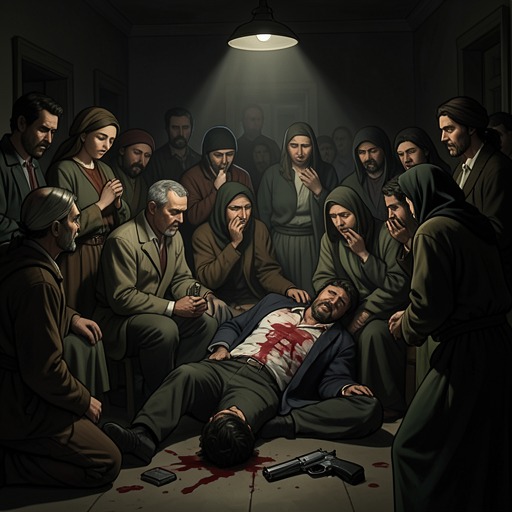
Seth’s political struggle becomes physically immediate when the Human Rights Association abducts Ana. A recording played for Detective Joseph Baker states that Ana is being held as Seth’s assistant and that, unless two million dollars is delivered by noon the following day, both Ana and Seth will be killed. The demand requires Joseph to make the drop at a specified location, turning the attack into a coercive operation aimed at both a senator and the people closest to him.
The abduction demonstrates the cost of Seth’s public role without reducing his politics to personal danger. Ana is targeted because of her connection to him, while Seth is made vulnerable through the person who helps him prepare and communicate his public work. The threat therefore attacks a political network as well as individual bodies. Joseph’s reaction to the recording—shock, fury, grief, and guilt over having left Ana—reveals how the crisis spreads through Seth’s circle, even though Seth himself remains the central political target.
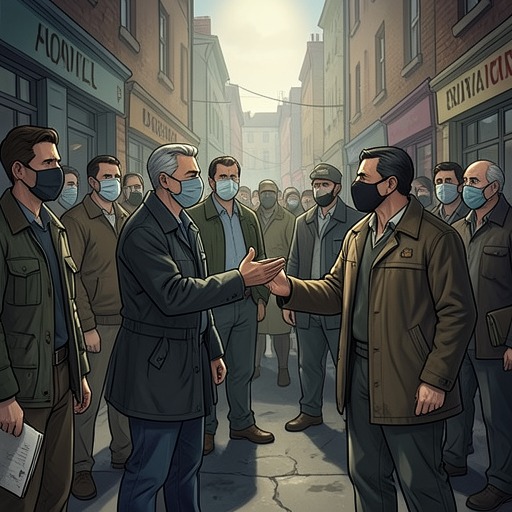
After Crystal Scott’s collapse and the hostage crisis, Seth appears outside the hospital for a live broadcast. He looks pale, but stands firmly before the microphones and cameras. His statement offers sympathy to Crystal’s family while refusing to treat the events of the preceding weeks as a reason for retreat. Instead, he says they have strengthened his resolve to change the country. The speech transforms private suffering into a public case against laws and customs that force shifters to deny themselves.
Seth’s most forceful appeal is an insistence that shifters must be able to identify themselves openly and without shame. He calls for them to stand up and declare, “I am here. I am proud of who I am, and I will not be silenced.” He immediately links that declaration to law: personal courage cannot be enough while shifters remain legally discriminated against in a country described as the home of the free. His closing challenge, “I ask you, free for whom?” exposes the contradiction between national ideals and the unequal distribution of freedom.
Relationships and Narrative Role
Ana functions as both Seth’s political aide and an active ally in his campaign. She is not a shifter herself, but she regards that difference as irrelevant to the question of justice. Her willingness to help perfect his speech and resist the registry shows that Seth’s cause reaches beyond shifter self-interest, building alliances through the principle that people’s rights should not depend on species identity. Her later abduction also makes the personal cost of supporting Seth’s work unmistakable.
Seth’s relationship with the wider shifter community is similarly representative but not detached. His career places him between public institutions and people who have been forced into silence, while his own history prevents him from presenting the issue as an outsider’s reform project. He speaks as a shifter who has experienced concealment, public reclassification, and the reversal of a celebrity image once used against his own community.
His narrative role is that of a visible political voice who converts recognition into resistance. The story contrasts the senator at the microphone with the hidden or psychologically damaged shifter: one stands before cameras and argues for change, while others suffer because they have been taught that their identities must be suppressed. Seth’s importance lies in holding those two conditions together. He does not merely represent successful assimilation into political life; he uses political success to challenge the demand that shifters assimilate by erasing themselves.
Change and Thematic Significance
Seth’s trajectory moves from manufactured public image to self-declared identity. As a movie star, he embodied the all-American man and was appropriated by an anti-shifter campaign. As a senator, he becomes proof that a shifter can occupy national power without surrendering the identity that power once denied. His election and longevity in office mark institutional change, but his speeches insist that representation is incomplete unless it alters the laws governing ordinary shifters.
The character also gives the book a clear political vocabulary for the conflict between secrecy and freedom. Concealment is presented not as a harmless private choice but as a condition produced by shame, discrimination, and fear of detention. Seth’s intervention treats legal reform, mental health, public speech, and self-acceptance as connected rather than separate concerns. Crystal Scott’s breakdown supplies the immediate human consequence; the registry supplies the institutional mechanism; Seth’s speech supplies the counter-narrative.
His appearance outside the hospital is therefore more than a moment of consolation. Pale and under threat, Seth nevertheless speaks with a powerful voice, making bodily vulnerability coexist with political firmness. The narrative leaves his campaign in progress rather than presenting a completed victory, but it establishes why his continued office matters: he has survived attempts on his life, crossed from celebrity into elected leadership, and chosen to make shifter visibility the foundation of a demand for equal freedom.